Module 3: Equipment, Inspection & Maintenance
How Pumps Are Coupled to Motors
The purpose of a pump is to transport liquids. Two methods for coupling a pump and motor are direct-drive and belt-drive, the simplest type of indirect-drive.
Direct-Drive
A direct-drive is the more common method used in petrochemical applications. The motor and pump are "directly" coupled, which means that the pump impellers spin at the same rate as the motor. The most common rotational speed is 3450 RPM.
Direct-drive pumps tend to be more economical and are simpler with fewer moving parts. A direct-drive pump is also more compact compared to an equivalent belt-driven pump.
Belt-Drive
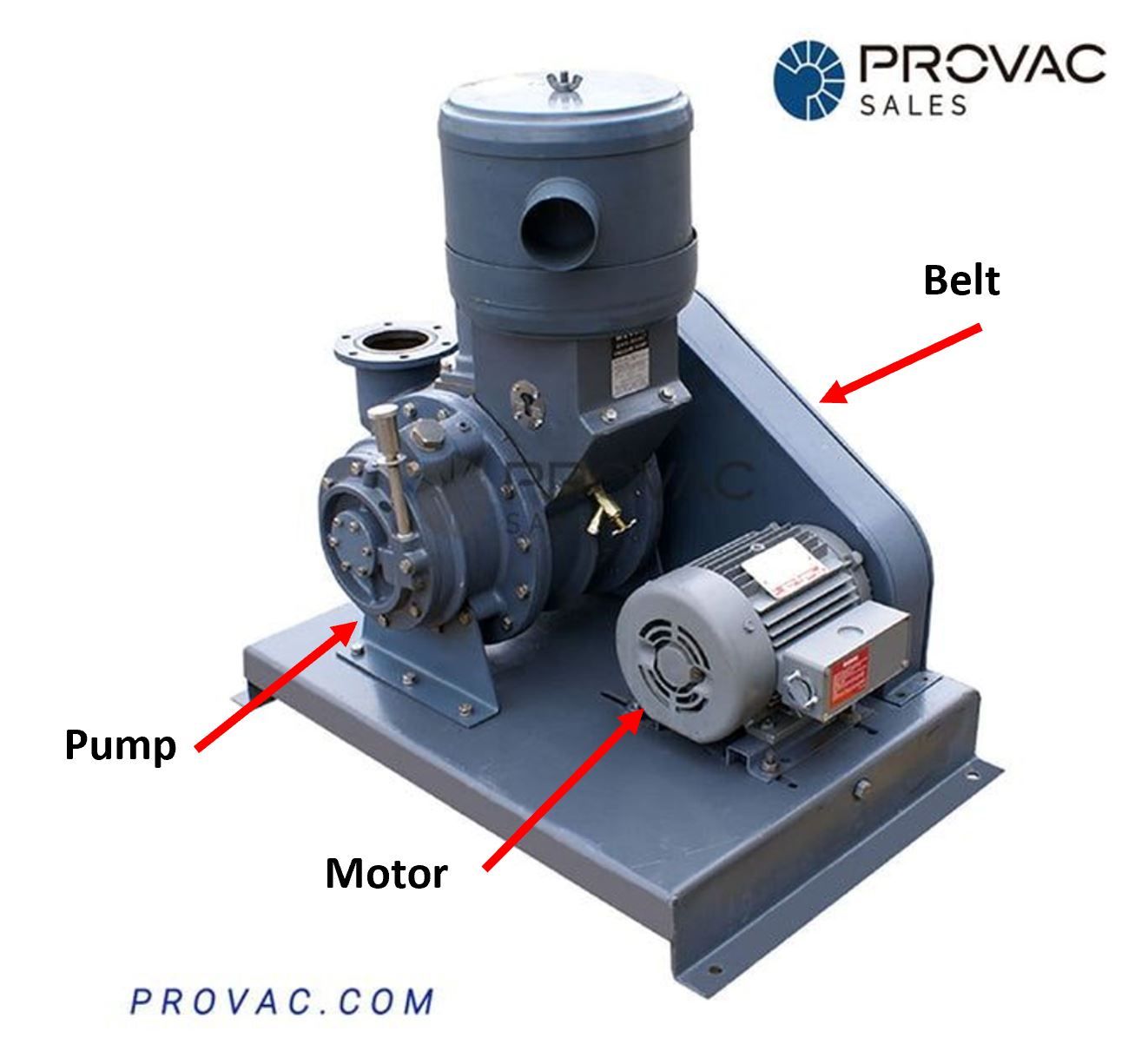
A belt-drive uses one or more belts to couple the motor rotation to the pump shaft. This means that the pump turbine can spin at lower rotational rate than the motor. The lower speed helps the pump to be more durable as the wear parts can last longer.
Some severe applications, such as coke slurry, lean more to belt-drive over direct-drive. One disadvantage of belt-driven pumps is the side loads introduced due to the design of the offset shafts.