Module 2: Refinery Processes & Units
From Methane to Hydrogen: SMR Explained
Steam methane reforming accounts for roughly 90% of global hydrogen production. Before exploring the different types of hydrogen being discussed today, it helps to understand how most of it is actually made.
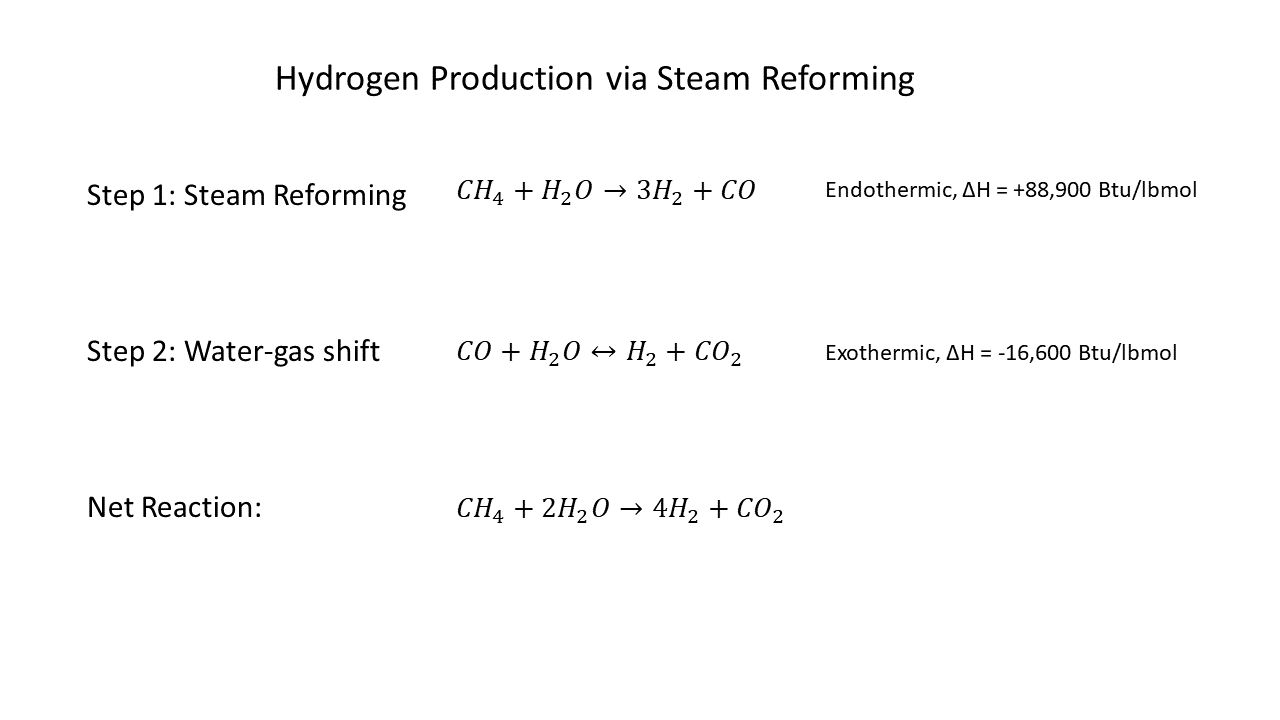
Step One: Steam Reforming
The first reaction occurs between water (steam) and methane in the presence of a nickel catalyst and high heat. The products are hydrogen and carbon monoxide. The mixture of hydrogen and carbon monoxide produced at this stage is called synthesis gas, or syngas.
Step Two: The Water-Gas Shift
The second reaction takes the carbon monoxide from step one and reacts it with more water. This produces additional hydrogen and carbon dioxide. The net result of both steps is hydrogen gas, which can then be purified and used elsewhere in the refinery.
Feed Flexibility
One advantage of steam reforming is that it is not limited to methane as a feed. Heavier hydrocarbons such as LPG and naphtha can also be used, which gives refiners flexibility depending on what feedstocks are available.
References
[1] Handbook of Petroleum Refining Processes, 4th Ed., Meyers, Chapter 5.2