Module 2: Refinery Processes & Units
Why SMR Hydrogen Needs Purification
Hydrogen produced by steam methane reforming is not ready for use in a refinery straight out of the reactor. The product, called syngas, is a mixture of hydrogen, carbon monoxide, carbon dioxide, and small quantities of other contaminants. Before it can be used, it needs to be purified.
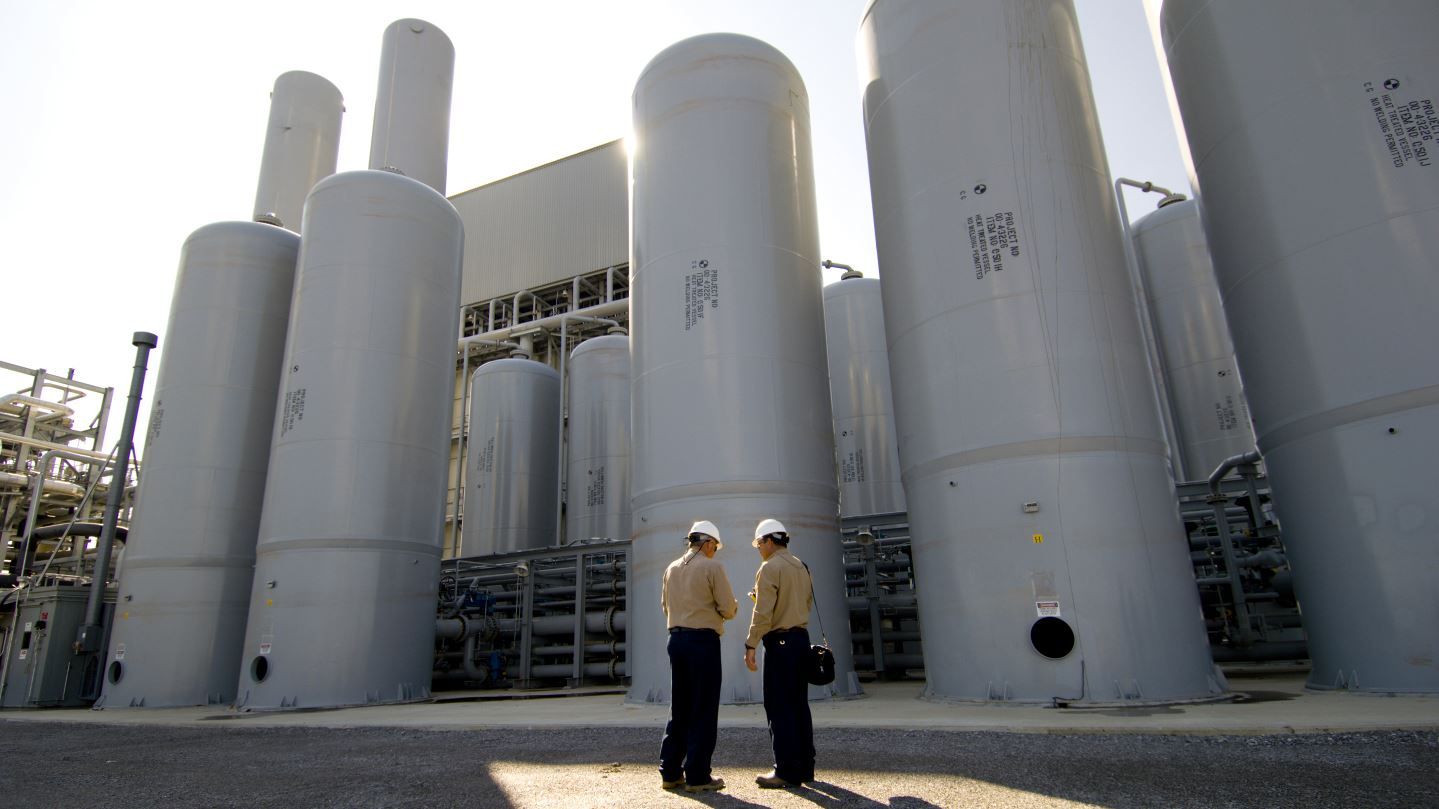
Why Purification Matters
Refineries use hydrogen primarily in hydrotreating, isomerization, and hydrocracking. All three processes rely on catalysts. Carbon oxides are extremely efficient catalyst poisons. Concentrations as low as 20 PPMv can cause accelerated deactivation for some catalysts. [1] This makes purification critical before the hydrogen reaches any downstream unit.
The Water-Gas Shift Step
Before purification, most hydrogen plants run the syngas through a water-gas shift reaction, either at high temperature, low temperature, or both. This converts carbon monoxide to carbon dioxide and produces additional hydrogen, improving both purity and yield going into the PSA.
Pressure Swing Adsorption
Pressure Swing Adsorption, or PSA, takes advantage of the fact that hydrogen is the smallest molecule in existence. Different adsorbents are layered inside multiple beds, each designed to capture one or more impurities. As pressure cycles up and down, impurities are trapped and then purged, leaving behind high-purity hydrogen. PSA systems routinely achieve hydrogen purities greater than 99.9%. [2]
References
[1] Handbook of Petroleum Refining Processes, 4th Ed., Meyers, Chapter 5.2