Module 3: Equipment, Inspection & Maintenance
PLC vs. DCS: Control System Basics
Two terms that come up often in refinery control systems are PLC and DCS. They are related but not the same, and it is worth understanding the distinction.
PLC: Programmable Logic Controller
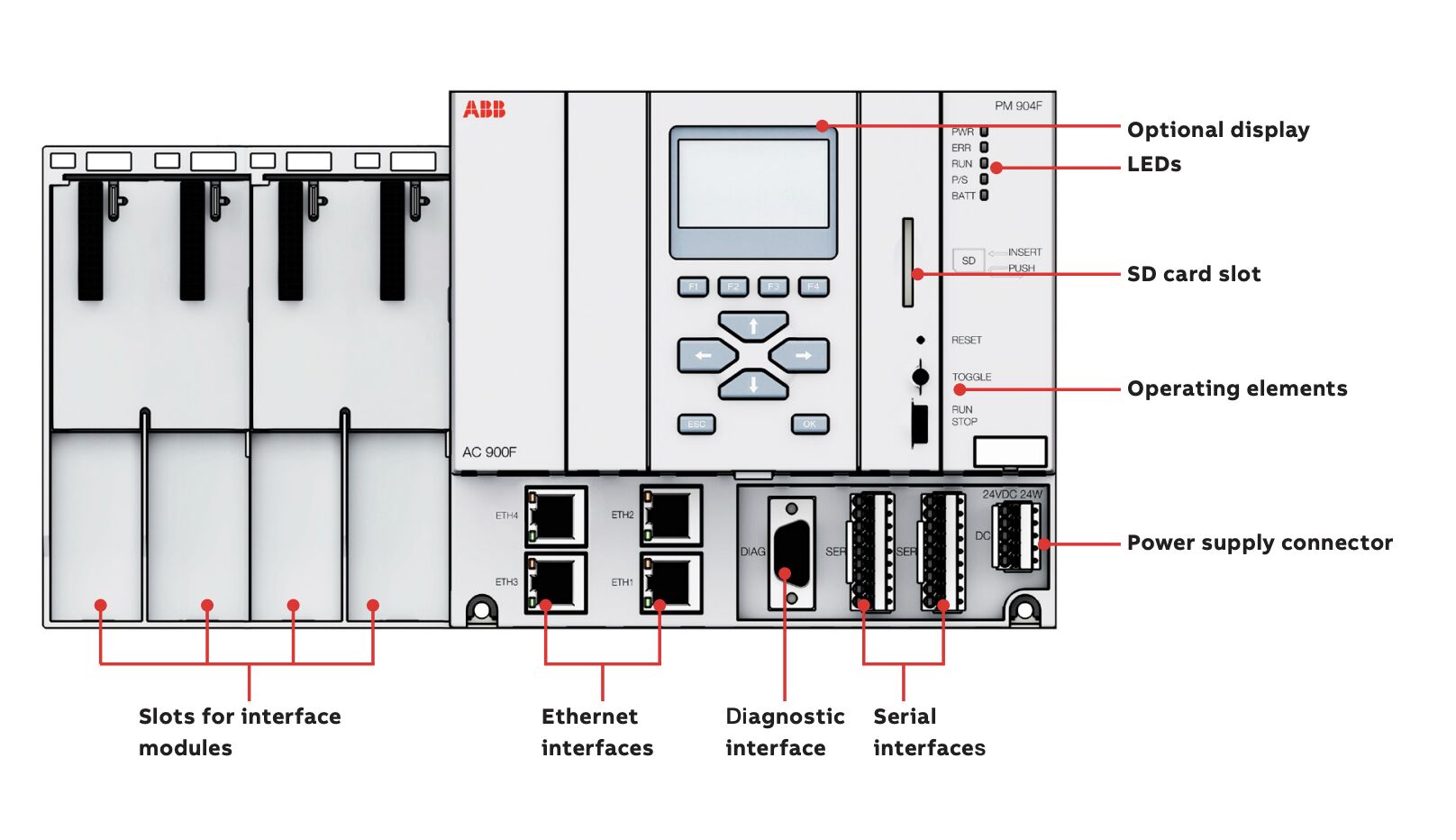
A PLC is a computer designed for industrial process control. It has inputs and outputs, a CPU, and is programmed to respond to signals from the field, things like valve positions, motor states, and sensor readings. PLCs are well suited for discrete, stand-alone applications. Each PLC is typically programmed and operated independently.
DCS: Distributed Control System
A DCS is designed to control large, continuous processes like an oil refinery or chemical plant. It also uses controllers with CPUs and I/O, but the key difference is integration. In a DCS, all controllers are networked together and share a common tag database. This makes it practical to manage thousands of control loops across an entire facility from a central operator interface.
The Key Difference
Think of a PLC as a stand-alone unit and a DCS as a coordinated system. A PLC is appropriate for a single machine or a small process. A DCS is built for a facility where hundreds of controllers need to communicate with each other, with third-party PLCs, and directly with field instruments.