Module 3: Equipment, Inspection & Maintenance
Fuses, Circuit Breakers, and Fault Protection
Fuses and circuit breakers serve the same purpose: protect electrical equipment from damage by interrupting the circuit during overloads and short circuits. An overload means too much current is flowing. A short circuit means current is taking a shorter, unintended path with no resistance. Either way, you need something to interrupt the circuit before damage occurs, and that's what both of these devices do.
The Fuse Came First
Thomas Edison invented the fuse to solve a protection problem for his incandescent light bulbs. The operating principle is simple: internal elements melt when a design current is exceeded. Once they melt, the circuit is interrupted. A fuse is essentially a deliberate weak point, one that sacrifices itself to protect everything downstream.
When troubleshooting equipment that won't run, it helps to visualize what's actually happening. A blown fuse means those internal elements melted at around 2,000 degrees C and broke the circuit. The right reaction isn't frustration, it's recognizing that the fuse did exactly what it was supposed to do. Better the fuse than the panel.
The Circuit Breaker Followed Forty Years Later
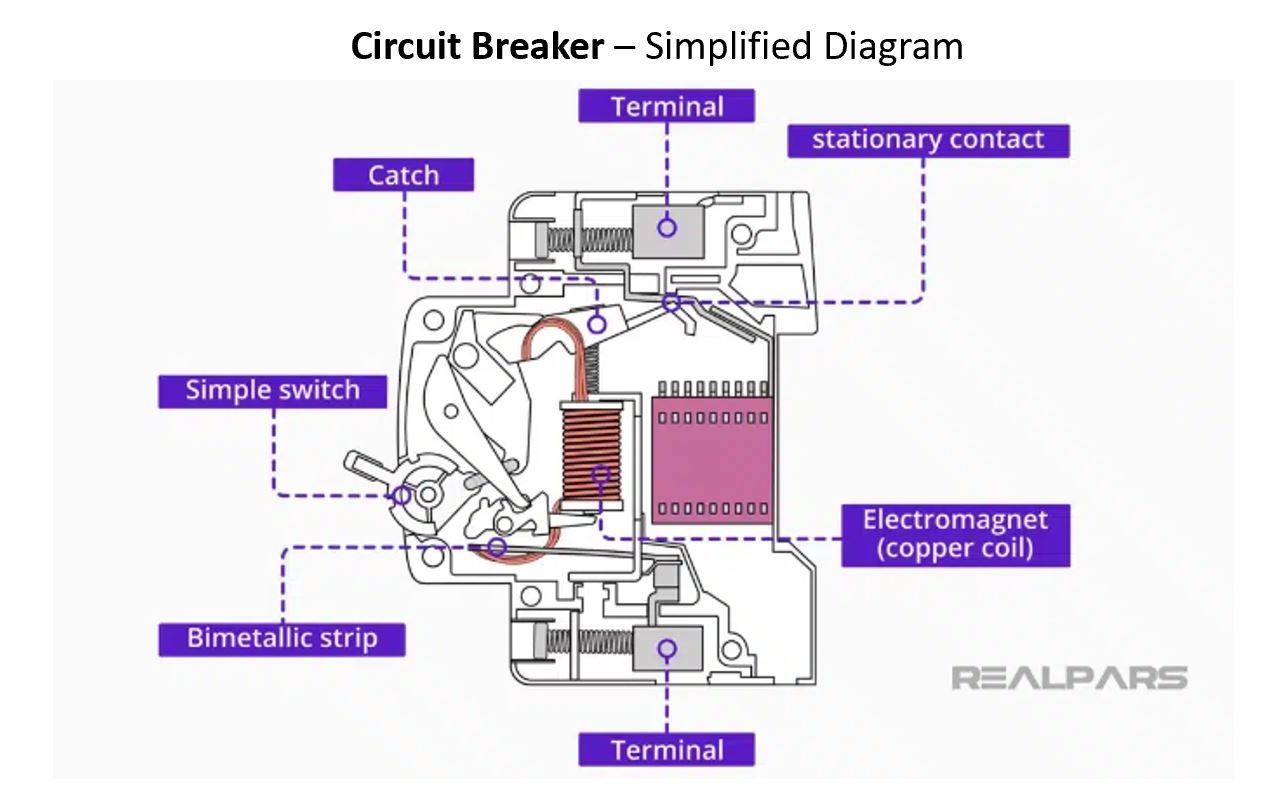
The next major advance in electrical protection came in 1923, when Hugo Stotz invented the circuit breaker in Mannheim, Germany. The defining improvement over the fuse: a circuit breaker can be reset once its internal components cool down. Rather than replacing a sacrificed element, you restore it.
Fuse or Circuit Breaker?
The choice between a fuse and a circuit breaker involves real trade-offs. Neither is universally better, it depends on the application.
Fuses
- Generally cheaper
- 4-5x smaller than equivalent circuit breakers
- Better at interrupting very high fault currents
- Will not explode under extreme fault conditions
- Must be replaced once blown
Circuit Breakers
- Can be reset after tripping
- No replacement part needed for routine faults
- Larger and more expensive
- Better suited for frequent switching
- Small explosion risk under extreme conditions
For a deeper look at how circuit breakers work mechanically, the team at RealPars has an excellent article worth reading.