Module 3: Equipment, Inspection & Maintenance
Gate Valves: Stem Nuts and Lubrication
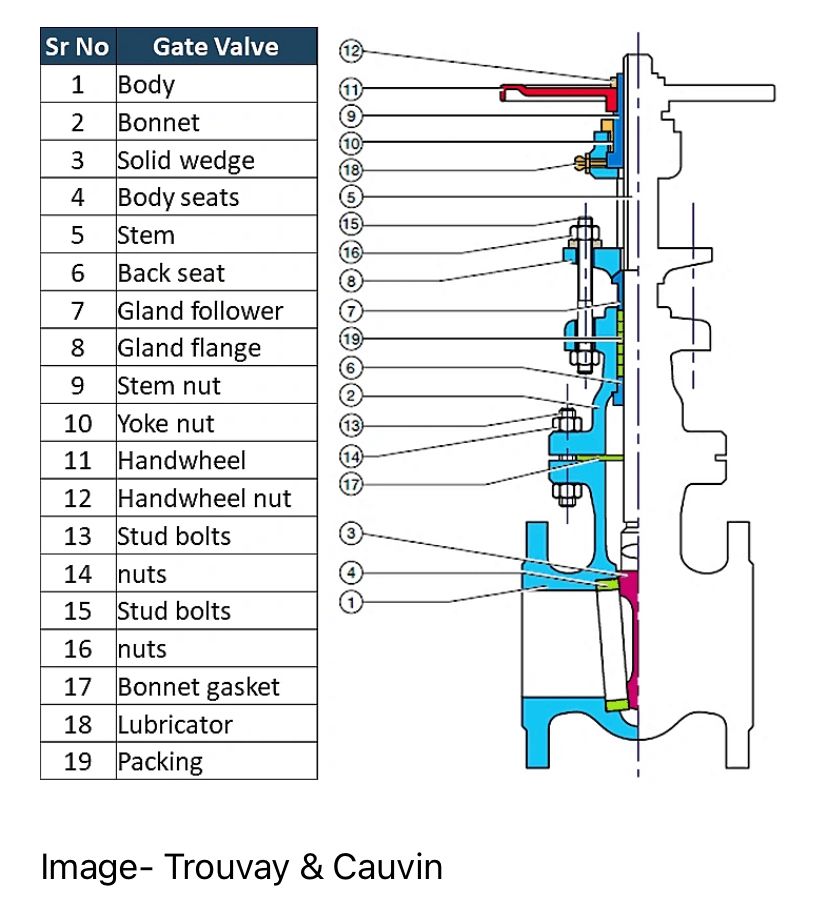
The diagram below has 19 labeled components. Two of the most important for understanding how the valve works and how it fails are the stem nut and the lubricator.
The Stem Nut
The stem nut is a threaded component mated to the stem, which is also threaded. Its job is to convert the rotational energy of the handwheel into the linear motion of the rising and falling gate. When you turn the handwheel, the stem nut translates that rotation into the gate moving up or down to open or close the valve. If the stem nut cannot turn freely, the gate cannot move.
Why Lubrication Matters
The lubricator allows grease to be injected directly into the stem nut. Regular lubrication keeps the stem nut moving freely and extends its service life. Grease also displaces water and contaminants that can work their way into the assembly over time. The stem itself should also be kept clean, because as it travels linearly through the stem nut, any contaminants on the stem transfer directly to the nut.
References
[1] Valve World, "Mitigating MOV Stem Nut Failure Through Proper Maintenance and Wear Measurement"