Module 3: Equipment, Inspection & Maintenance
Oily Water Sewers and Liquid Seals
Dry drains to oily water sewers are not drains. They are vents!
For drains to the oily water sewer, it is critical to have liquid seals. Two common methods for keeping a liquid seal are the P-Trap and the Bell Drain or Bell Trap Drain.
P-Trap
Look underneath your kitchen sink. The part of the pipe that curves down then up (like a 'U') before leveling off is a p-trap. The low-point maintains a liquid seal to prevent vapors from migrating into your home.
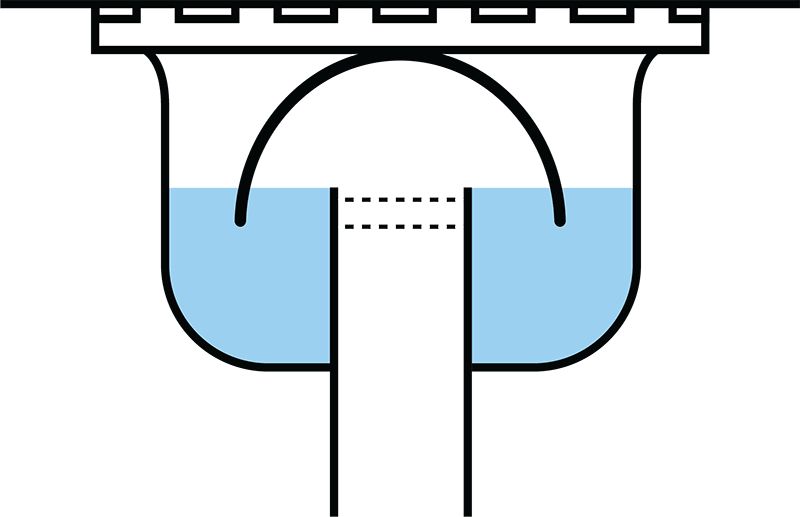
Bell Trap Drain
Combination of a basin and bell-shaped component that creates a water seal. [1]
KEY TAKEAWAY: To function correctly, the p-trap and bell trap drain must both have water! If they are dry, then vapors have a free ride from the sewer to atmosphere via the trap.
Oily Water Sewer
Most refineries have at least two drainage systems: the oily water sewer and storm water drainage. Oily water sewers send collected waters to wastewater treatment. When the treated water meets specifications, the water can be sent off-site (exact destination depends on the site). Storm water drainage collects water from rain events. Runoff that is not contaminated with oil does not need the same treatment before it is ready to be discharged.
References
[1] A Homeowner's Guide to Plumbing Traps
Image credit: durgothailand.com